Systems · Flagship
The AI second brain
A system that reads the inboxes, files the paperwork, refreshes the dashboards, and leaves me the decisions.
- Work · 2,094
- Domains · 2,216
- People · 272
- Personal · 286
- Venture · 90
- Knowledge · 190
- System · 323
- Projects · 31
- Intake · 163
- Archive · 1,010
- Notes
- 8,820+138 wk
- Links
- 24,686+330 wk
- Drawn
- 6,6751,452 unlinked
- 21 weeks of notes
- 2026-05-102026-10-01
What was failing
A day job, a business I was building, a family and a homestead, all generating paper at once: email, meeting notes, filings, receipts, manuals, ideas. The part nobody else could file was the cross-domain part, the note that matters to two of those lives at the same time.
I had tried most of the tools. Every one of them needed me to show up, so every one became another place not to look. The longer version is in the essay.
What I built
A plain-text vault of more than seven thousand markdown notes, organized by domain, on my own machine, with an agent operating it on a schedule. Not a chatbot I ask questions: an operator with standing orders. Overnight it reads the intake channels, summarizes what arrived, links each item to what it relates to, and routes it home. Anything it can't place with confidence goes to a queue for me instead of a reasonable-but-wrong folder.
The division of labor is strict and it is the whole design: the system handles capture, routing, and refresh; I handle judgment. It runs on four rules:
- Failures loud, successes silent. A job that breaks must announce itself; a job that works shouldn't need attention.
- One canonical location per concept. The moment two notes claim to be the truth, the system is lying to you somewhere.
- Implementation precedes documentation. Working things first, write-ups second.
- The human owns the blast radius. The system files, drafts, and proposes. Anything irreversible or outward-facing waits for me.
What changed
My mornings, and my attention. The volume of information didn't shrink; what it costs me did. Filing and finding cost me almost nothing now, and what's left is the part that was always the real job: judgment. The system also grew a front door, the Command Center, where it reports what ran overnight and what failed.
What you can inspect
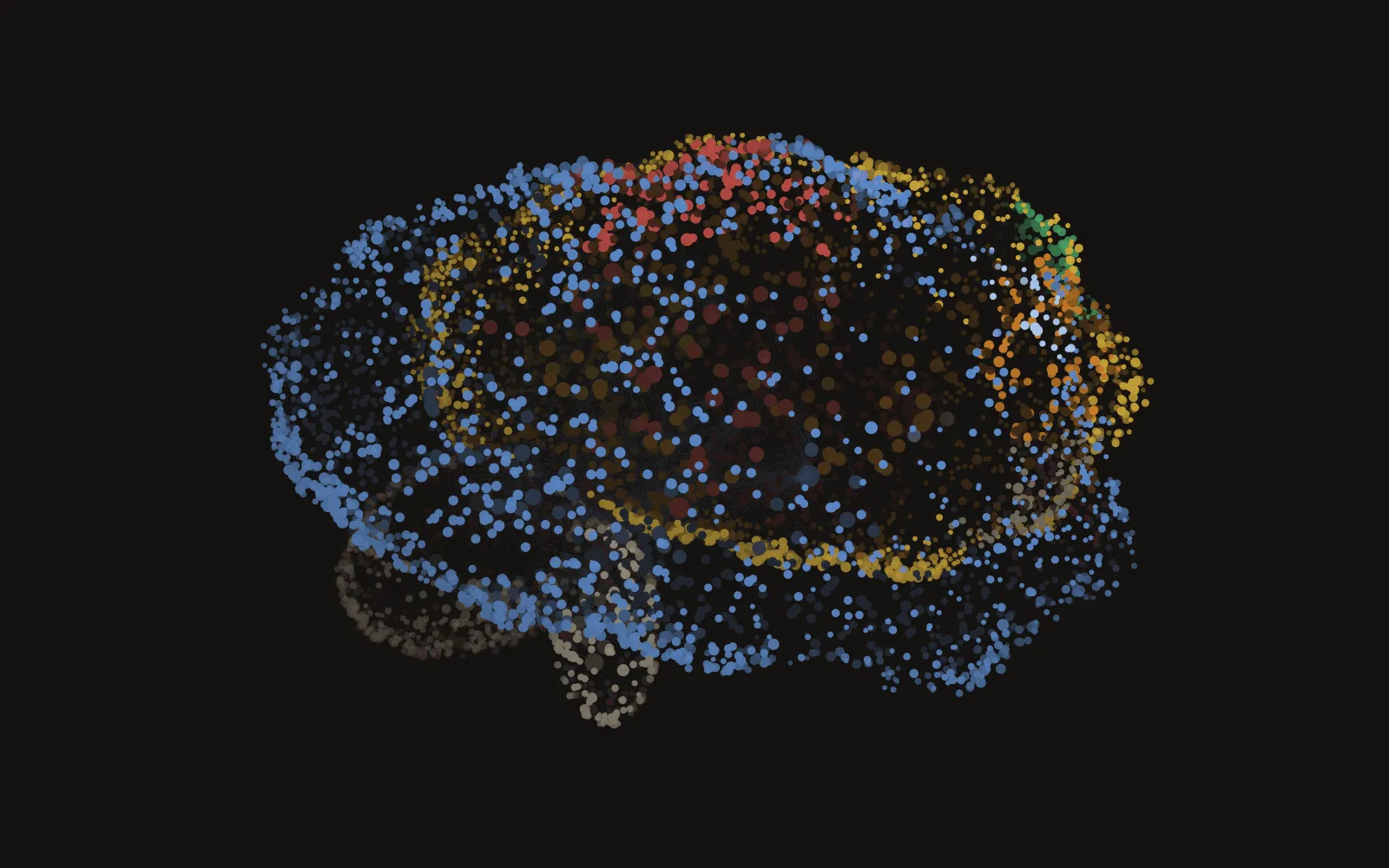
The graph above is an actual capture: the real vault, redrawn every week from its own links. Every point is a note and every line is a link, but the payload carries numbers only (no titles, no paths, no text), so there is nothing in it to read. The four layers and the routing rules are on the architecture page, and the failure it was built to catch is the fallback that works.
What isn’t proven
I haven't measured the time it saves. The claim is about attention, not a stopwatch, and I would rather leave it unmeasured than put a number here I can't source.
The quiet failures aren't solved. A job that falls back to an old source and succeeds still looks like a job that worked until it reports which source it actually used, and teaching every job to do that is work in progress.
It is built for one person on one laptop. Moving it to a new machine this autumn is the first real test of whether the runbook's "clone it, set one variable, re-register the jobs" is as simple as it reads.
How this site is built
The same system keeps this site. I write the words, and they are held against a voice guide I wrote from my own emails and notes. The system does the rest: it drafts share entries from what I've captured, checks every page for the facts that must never appear, rebuilds the graph above each week, and refuses to publish anything I haven't approved. Nothing here goes live without me.